


When We Keep Pushing Through
Last week, we discussed what shapes our capacity. If you missed it, you can read it here. This week, I want to share a story about what capacity can look like in real life. It illustrates what can happen to a person’s best intentions.
A mother was at work one winter Friday. Forecasters predicted a major winter storm heading in that evening and lasting several days. People were out preparing for the upcoming storm. Work had been especially busy that morning. While she loved her job, working in a non-profit with vulnerable people could be emotionally draining. Her heart ached at some of the circumstances she saw. It had been a particularly rough week, and with the weather rolling in, a pressure headache had been building since early morning. Like many parents, though, her focus wasn’t only on work that day. With the weekend forecast, she wasn’t sure they would be able to leave their rural community. So, during lunch, she made a meal plan and grocery list for the next week. The plan was to stop for groceries right after work.
Around three o’clock, she noticed the snow had started earlier than expected. The roads would be slick on the way home. About 45 minutes later, her manager sent staff home so everyone could get home safely. The grocery store was just down the road from her office, and the highway was right beside it. She thought she could quickly get in, grab the groceries, and get home.

When she walked into the grocery store, it was clear that many other people had the same idea. The store was much busier than she expected. Her headache was still nagging her, but she decided to persevere through this one task so she could get it done and go home. When she finished shopping, the checkout lines were long and people’s patience was running thin. Again, she persevered. She paid for the groceries, loaded them into the car, returned the buggy, and finally backed out of the parking space.
The drive home took her along four separate highways. The first highway was backed up, and traffic was moving at a snail’s pace. Traffic was flowing on the second highway, but fewer cars travelled this road, so the snow had started to accumulate. The drive was getting tricky. As she approached the third highway, traffic slowed to a crawl again. She wished she had known the traffic would be this bad. She would have gotten off at the previous exit and taken the back roads home. Now she was inching from one highway to another, a headache sitting straight behind her eyes. All she wanted was to be home in bed. The muscles in her arms and legs were tight and sore. She was white-knuckling the drive home, guiding her car along the slippery roads, trying to avoid other drivers and stay out of the ditch.
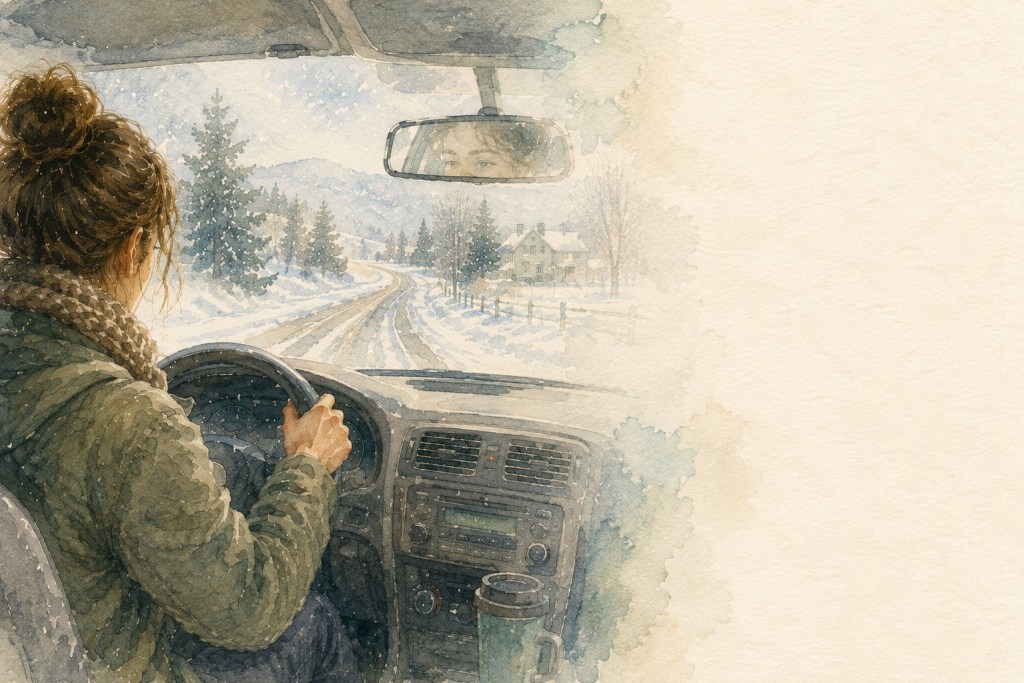
For an hour, she inched forward on a short stretch of highway, trying to reach the final stretch home. Up the incline, through the turn, and onto the last ramp, she inched forward. All she could think about was a hot cup of tea to soothe the ache behind her eyes. Finally, she came to her street and could almost feel the bed beneath her. After making the turn, she found the snow in the subdivision deep. One of the joys of living in a rural community was being on one of the last streets to get snow removal. Even getting down the street was difficult. Two and a half hours after she left work for the day, she approached the house and realized her husband was not home yet. The driveway had not been ploughed. She backed into the driveway as best she could and parked at the top to unload the groceries. When she stepped out of the car, she remembered she wasn’t wearing snow boots. There was no way to avoid filling her shoes with snow. She carried the groceries through the snow to the front door and closed up the car. She opened the door, carried the groceries inside, and noticed it right away. The counter was full of dishes, pots were still on the stove, the sink was full of glasses, and there was nowhere to put the groceries away.
Her teenage son had one chore after school to help support the family. When he got home from school, he was to empty the dishwasher and put the dirty dishes back in. Standing there with the headache behind her eyes, aching muscles from the drive, and bags of groceries waiting to be put away, all she could think was, “You had one job!”
The sarcastic voice in her head grew louder with each comment, pushing her further over the edge. Her son came bounding up the stairs to tell her about his day and what he was making on the computer. He had started it in his computer technology class that day and was excited about what he had learned. All she could think in that moment, though, was, “What the hell have you been doing since you got home?” Without really paying attention to what was happening, the sarcastic comments in her head started spilling out of her mouth. Before she knew it, she was in full-blown yelling mode. She turned around to see what her son had to say for himself and saw the look of deflation on his face. It was a look that stopped her right in her tracks, and she would not forget it. In that moment, she realized she could not persevere any longer and needed some space. With a look of anguish on her face, she said, “I need a couple of minutes. I am going upstairs.”


